
Lawn aeration is one of the best ways to relieve soil compaction on Phoenix commercial properties—but it’s often only part of the solution. If you’ve been disappointed with the results in the past, your landscape may need more than aeration alone.
That’s why commercial landscaping companies often recommend gypsum as part of the same treatment rather than as a separate service. While each plays a different role, they’re designed to work together to improve compacted soils. Understanding how they complement each other explains why this approach produces better results.
Key Takeaways
- Phoenix clay and caliche soils compact quickly under foot traffic and heat, and core aeration reopens them.
- Gypsum has to go down while the aeration plugs are still open; miss that window and most of it is wasted.
- Gypsum improves soil structure and flushes salts and sodium below the root zone.
- Scheduling in July lets monsoon rain carry the gypsum down into the soil profile.
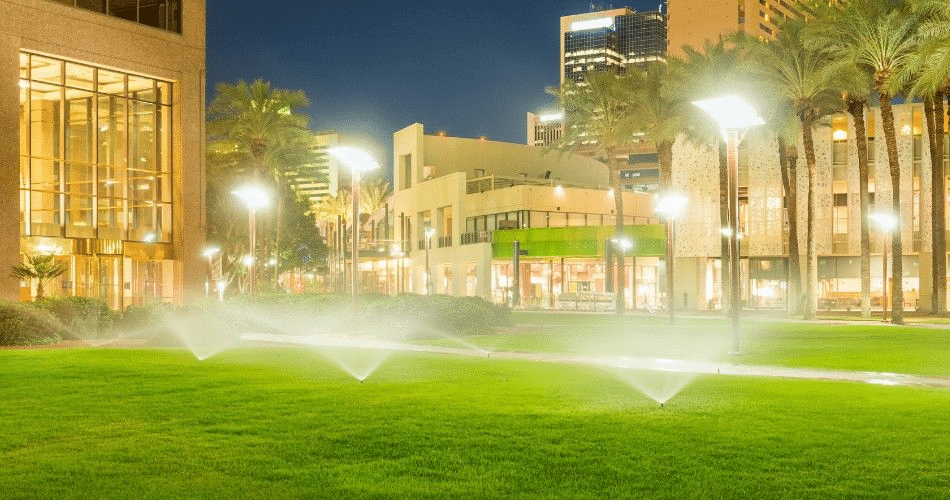
Healthy commercial turf starts below the surface with soil that allows water, oxygen, and nutrients to reach the roots.
Why Does Phoenix Commercial Turf Compact So Fast?
Phoenix commercial turf compacts fast because it grows on heavy, alkaline clay soil, often over a caliche hardpan that blocks water and roots. Foot traffic and summer heat compact things further, and the highest-use zones give out first: school athletic fields, HOA commons, and the turf islands around apartment buildings.
Once soil compacts, air, water, and nutrients stop reaching the root zone and cause the thinning turf, pooling, and runoff you see on the surface.
What Does Aeration Do?
Core aeration is the mechanical fix for compacted soil. A machine pulls thousands of small plugs from the turf, reopening channels so roots can breathe and water can move again. Those open plug holes do more than let air in; they are the delivery pathway for gypsum, which has to follow immediately.
What Is Gypsum?
Gypsum (calcium sulfate) is a naturally occurring mineral used to improve the structure of compacted, clay-heavy soils. Unlike fertilizer, it doesn’t feed the grass. Instead, it works below the surface to create better growing conditions for healthy roots.
On Phoenix commercial properties, gypsum provides two primary benefits:
- Improves Soil Structure: The calcium in gypsum helps clay particles clump together instead of remaining tightly packed. This creates a more open soil structure that allows water, oxygen, and nutrients to move more freely.
- Helps Flush Excess Sodium: Gypsum replaces sodium in the soil so irrigation water can carry it below the root zone, improving soil conditions over time.
Why Do Aeration and Gypsum Have to Be Done Together?
Gypsum only works if it reaches the compacted soil beneath the surface. Core aeration creates thousands of small holes that provide a direct pathway into the root zone, making the treatment far more effective than simply spreading gypsum across the surface.
That opportunity doesn’t last long. As the soil plugs break down and settle back into the holes, the pathway closes. Waiting to apply gypsum later means much of it remains near the surface instead of reaching the compacted soil where it’s needed most.
The gains are cumulative: a single treatment will not transform the soil, but paired annually with aeration it builds steady improvement year over year. That’s why Titan treats aeration and gypsum application as one process performed during the same visit.
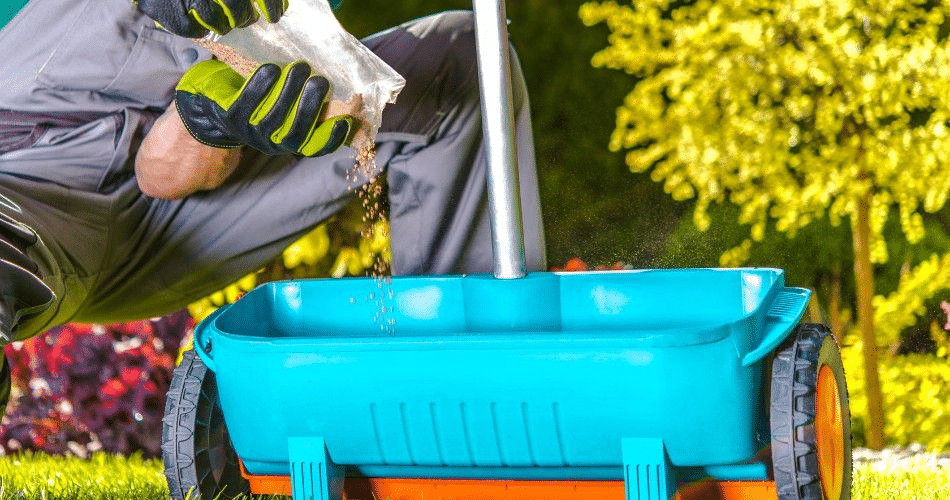
Gypsum is applied across the lawn so it can move into the aeration holes and reach the compacted soil below.
When Should Phoenix Commercial Properties Aerate and Apply Gypsum?
Phoenix commercial properties should aerate and apply gypsum to warm-season bermudagrass sometime between April through July, while it is actively growing. Within that window, July is the ideal time to schedule.
This is because July coincides with monsoon season. Gypsum needs water to carry salts and sodium down through the soil, and the July-through-September monsoon supplies the steady, deep moisture to move it. Aerate just before the rains and the monsoon drives the gypsum deep into the profile—deeper than irrigation alone reaches. Aerate in fall instead, after the grass slows and the rains pass, and you forfeit that free, deep flush.
What to Expect From a Professional Aeration & Gypsum Program
When comparing landscapers for an aeration service in Phoenix, AZ, the proposal itself tells you a lot. A complete commercial program should include:
- Core aeration that pulls true soil plugs, not spike or slice aeration that only punctures the surface.
- Gypsum applied immediately after aeration, while the plug holes are still open.
- Deep watering to move the gypsum into the soil and flush salts below the roots.
- Scheduling in the active-growth and monsoon window, repeated annually.
- Care to locate and mark sprinkler heads, valve boxes, and shallow lines before the machine runs, so irrigation isn’t damaged.
A contractor who aerates but never mentions gypsum is not delivering the full service.
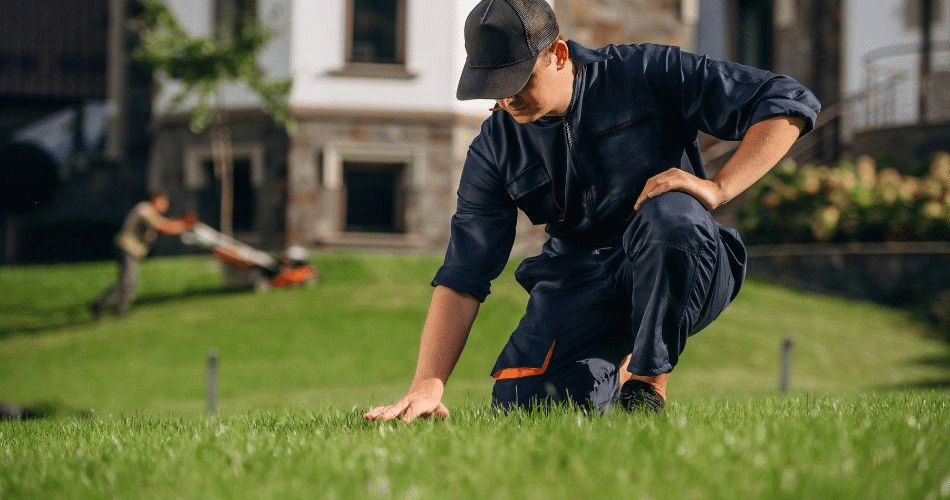
A professional evaluation helps determine when your commercial property will benefit most from lawn aeration and gypsum.
Improve Your Commercial Turf with Lawn Aeration and Gypsum from Titan Landscape Services
For Phoenix commercial properties, lawn aeration and gypsum work best together. By performing both services during the same visit, Titan Landscape Services helps ensure gypsum reaches the compacted soil where it can make the greatest impact, giving your turf the best opportunity for long-term improvement.
Call (480)-418-4026 or request a property evaluation to get started today.
