
Decomposed granite (DG) doesn’t stay evenly distributed forever. Across Phoenix commercial properties, foot traffic, landscape maintenance, runoff, and monsoon weather gradually move and compact the material, leaving some areas thin while it piles up in others. The result can be exposed soil, uneven coverage, more visible weeds, and a landscape that looks worn even when the surrounding plants are well maintained.
A decomposed granite refresh isn’t just adding another layer over what’s already there. The existing coverage, depth, compaction, drainage patterns, and areas of displacement all affect what the property actually needs. For Phoenix property managers, knowing when DG needs to be redistributed, replenished, or refreshed can help keep landscaped areas looking consistent and performing as intended.
Key Takeaways
- Loose decomposed granite can begin showing visible fading and thinning within a year or two under Phoenix heat, and monsoon rains accelerate displacement every season.
- Late monsoon season, roughly August through September, is the right window to refresh before fall occupancy rises and contractor availability tightens.
- A professional refresh is more than adding material and includes regrading, edge inspection, and pre-emergent sequencing before new granite goes down.
- Thin DG coverage can be a weed suppression failure as much as a cosmetic one, and refreshing now reduces winter weed pressure.
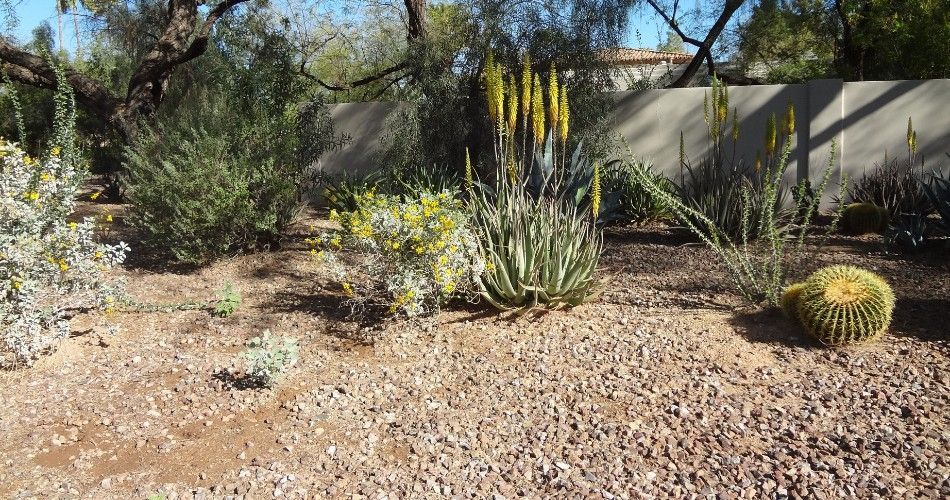
Decomposed granite provides durable, low-maintenance ground cover around drought-tolerant plants in a Phoenix landscape.
Why Does Decomposed Granite Break Down Faster in Phoenix?
Decomposed granite breaks down faster in Phoenix than in most U.S. markets because the climate applies three simultaneous stresses that accelerate natural weathering.
Heat & Thermal Cycling
DG is already weathered granite by definition, and Phoenix temperatures accelerate continued weathering. The daily swing between extreme heat and cooler nights stresses the grain boundaries between minerals, gradually loosening fine particles that then migrate into the soil beneath.
Surface color is the visible indicator. Fading typically reflects the loss of fine surface particles and the exposure of coarser material underneath, not a change in the granite itself. On properties Titan maintains across the Valley, decomposed granite that initially has consistent color and coverage can begin looking faded, uneven, or thin within a year or two.
Monsoon Rain & Wind
Short-burst rainfall arrives faster than the beds can absorb it, sheeting across the surface and carrying granite with it. That displacement is what creates the bare spots and uneven patches that appear overnight after a storm.
High-wind haboobs compound the problem differently. Wind lifts the lighter fine particles first and leaves the coarser material behind, producing the bleached, gravelly texture property managers notice the morning after. Where water pools near curbs and sidewalks, it undercuts the bed edge and pulls material toward drains.
Foot & Vehicle Traffic
Commercial properties have year-round foot traffic, and every pass compacts the granite a little further, closing the pore space that lets water drain through.
Zones near building entries, courtyard paths, and parking lot edges compact first and hardest. Those areas usually look the worst, even when the rest of the property looks fine.
What Are the Signs Your Decomposed Granite Needs a Refresh?
A quick property walkthrough can tell you a lot about the condition of your decomposed granite. You do not need a landscaper to spot many of the warning signs that coverage is thinning, shifting, or becoming compacted. Check for the following as you walk the property:
- Bare Spots: Look for exposed soil beneath the granite, especially near building entries, walkways, and parking lot edges where displacement concentrates.
- Uneven Depth: Beds that are visibly thick in some zones and thin or absent in others indicate material has moved rather than worn away evenly.
- Compaction Near Walkways: Granite that feels hard-packed underfoot has lost its drainage function and needs redistribution before any new material is placed on top of it.
- Weeds Pushing Through: Thin coverage lets weed seeds reach light and germinate, so visible weeds are usually a depth problem before they are a weed control problem.
- Displaced or Damaged Edging: Steel or aluminum edging that has shifted or separated allows granite to keep migrating into adjacent turf and hardscape.
- Faded Color: Surface granite noticeably lighter than the material around it signals that fine particles have migrated away, leaving coarser material exposed. The bed is thinning, not just dirty.
If the walkthrough leaves you unsure what you are looking at, Titan offers a free property evaluation and can tell you whether the beds need redistribution or a full refresh.
How Often Does Commercial Decomposed Granite Need to Be Refreshed?
How often decomposed granite needs to be refreshed depends on the type of DG, how heavily the area is used, and how quickly material is lost or displaced. High-traffic areas, slopes, drainage paths, and exposed sections of a commercial property may need attention sooner than protected landscape beds.
Loose Decomposed Granite
Based on Titan’s experience maintaining commercial properties across Phoenix, loose DG typically needs a top-layer refresh every one to two years. Areas near walkways, entrances, parking lots, and drainage paths may thin faster because foot traffic, runoff, and routine landscape maintenance continually move material.
Not every area will need the same amount of new granite. Some may only need existing material redistributed, while areas with significant depth loss may need additional DG to restore consistent coverage.
Stabilized Decomposed Granite
Stabilized DG combines granite with a binder that helps hold the material in place, so it generally lasts longer than loose DG. Under normal commercial use, Titan typically sees these surfaces go about three to five years before needing a refresh.
The binder does not eliminate wear, however. Heavy traffic, drainage issues, and surface damage can still create thin or deteriorated areas that need attention before the rest of the surface reaches that three- to five-year range.
When Is the Best Time of Year to Refresh Decomposed Granite?
Late monsoon season into early fall is often an ideal time to refresh decomposed granite on Phoenix commercial properties. By this point in the year, months of heat, runoff, traffic, and summer storms have made worn areas easier to identify, while completing the work before fall can help property managers get ahead of seasonal scheduling and property demands.
- DG Conditions Are Easier to Assess: Arizona’s official monsoon season runs June 15 through September 30, giving property managers an opportunity toward the end of the season to identify areas where granite has thinned, shifted, or compacted and determine what needs to be replenished.
- Contractor Availability Can Tighten in Fall: Waiting until October can mean competing with other commercial properties scheduling post-summer landscape work. Planning earlier gives property managers more flexibility to complete the refresh when it works for their property.
- School Campuses Are Back in Regular Use: For schools and other institutional properties, refreshing worn DG can help restore the appearance of high-visibility landscape areas as students, parents, staff, and visitors return to campus.
- Fall Leasing and Property Activity Can Increase: At apartments and HOA communities, landscape beds contribute to the first impression residents and prospective tenants get when entering the property. Refreshing thin or uneven DG keeps these areas looking maintained rather than waiting until appearance issues generate complaints.

Decorative granite adds texture and defines planting areas while providing durable, low-maintenance ground cover.
What Does a Professional DG Refresh Involve?
A professional decomposed granite refresh follows a specific six-step sequence, and that order is what determines whether the refresh lasts for one season or several. Skipping the preparation steps is why the same bare spots reappear within months.
- Site Inspection: Identify bare spots, measure existing depth across zones, and check edge containment before anything is ordered.
- Regrading: Redistribute displaced material first. New granite placed over uneven existing material locks in the unevenness rather than correcting it.
- Edge Containment Check: Inspect steel or aluminum edging for shifts, gaps, and separation, and repair it before new material goes down.
- Pre-Emergent Herbicide Application: Apply the pre-emergent herbicide and allow it to cure before new granite is placed. Applying after the new layer is down significantly reduces effectiveness.
- New Material Placement: Add a half-inch to one-inch top layer to restore coverage and color, then compact high-traffic zones after placement.
- Depth Verification: Confirm two to three inches of total depth across the beds, which is the minimum depth Titan uses for erosion control and weed suppression.
Frequently Asked Questions About Decomposed Granite
Does decomposed granite need a weed barrier underneath it?
Landscape fabric beneath DG reduces bottom-up weed germination from soil-borne seeds and slows the granite’s gradual migration into native soil. It is not a permanent weed solution, because organic matter accumulates on top over time and weeds eventually find footing above the fabric. If existing fabric is torn or was never installed, a refresh is the right time to address it.
Can decomposed granite be used in areas with heavy vehicle traffic?
Stabilized DG handles light vehicle loads such as golf carts and maintenance vehicles reasonably well when installed at adequate depth over a compacted base. It is not suited to standard parking or drive lanes, where pavers, asphalt, or compacted gravel perform better. On commercial sites, stabilized DG is most often used in pedestrian zones like entries, courtyards, and walking paths.
Can decomposed granite be refreshed without removing the existing material?
In most cases, yes. A refresh begins by regrading what is already there rather than hauling it off. Full removal is typically warranted only when the existing material has degraded past the point of redistribution, when fabric needs replacing, or when the grade itself has shifted.
How much decomposed granite does a commercial property need for a refresh?
Volume depends on bed square footage, current depth, and how much material moved during the monsoon. A professional assessment measures depth zone-by-zone before calculating material, because ordering without that step leads to over- or under-application.
What happens if decomposed granite is not refreshed after monsoon season?
Bare spots left through fall allow soil to mobilize in subsequent rains, which can lead to mud being tracked into building entries and common areas. Faded, uneven beds can also make an otherwise well-maintained property look neglected to tenants, prospective residents, and HOA inspectors.
Is decomposed granite a good choice for school district properties?
Yes. DG holds up well under foot traffic, drains quickly after monsoon rains, and uses far less water than turf, which is why it is widely used on Arizona school grounds. It does require consistent maintenance, including post-monsoon redistribution, periodic top-layer refresh, and a coordinated pre-emergent program to keep beds clean through the school year.
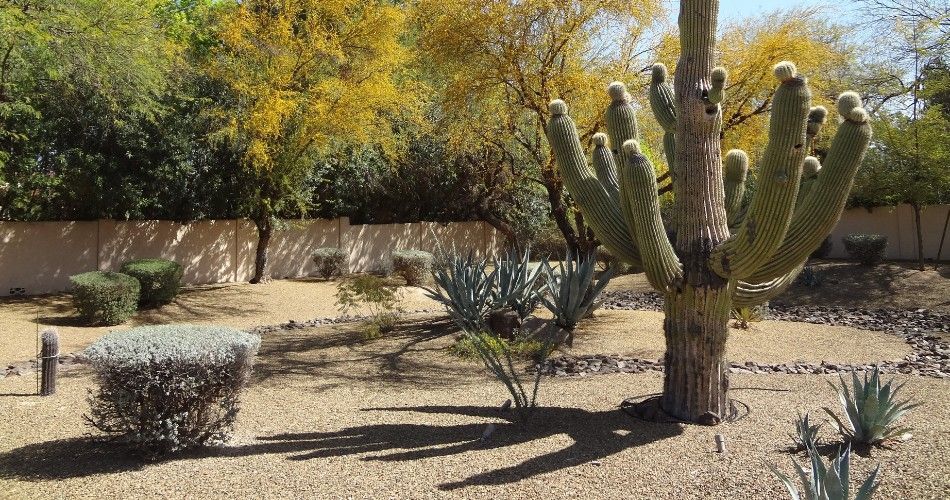
Decomposed granite creates a natural-looking, low-maintenance ground cover for cacti, agave, and other drought-tolerant plants.
Schedule Your DG Refresh with Titan Landscape Before the Fall Rush
If your decomposed granite is looking worn, uneven, or faded, addressing it before fall can help prevent small maintenance issues from becoming larger ones. A timely refresh restores consistent coverage and appearance while preparing landscape beds for pre-emergent applications in October, ahead of Phoenix’s winter weed cycle.
If you’re unsure whether your property needs redistribution or a full refresh, call us at 480-418-4026 or schedule a site assessment. We can assess the beds and recommend the right next step before fall demand fills the schedule.
