
Bermudagrass on Phoenix commercial properties begins going dormant as nights cool, often just as residents and visitors are spending more time outdoors. Overseeding in Phoenix, AZ with perennial ryegrass keeps entries, common areas, and amenity turf green through winter, but success depends on getting the timing, prep, and watering right.
For commercial properties, the goal isn’t just getting ryegrass to grow. It’s establishing even, reliable coverage across high-traffic, highly visible areas. Knowing when to seed and how to prepare and water the turf can make the difference between a consistent winter lawn and thin, patchy results.
Key Takeaways
- Bermudagrass growth slows as temperatures fall in autumn and typically goes dormant during winter, while the ideal Phoenix ryegrass seeding window runs October 10 through November 10.
- Poor preparation can hurt overseeding results, especially when seed-to-soil contact is limited or turf is cultivated too aggressively before seeding.
- Water 3 to 4 times a day for the first 7 to 10 days, then gradually reduce irrigation based on soil moisture, weather, and site conditions.
- UA Extension recommends 12 to 15 pounds of ryegrass per 1,000 square feet, with the appropriate rate depending on site conditions, turf expectations, and management goals.
- Bundling a winter flowerbed transition into the same overseed visit saves a mobilization cost.
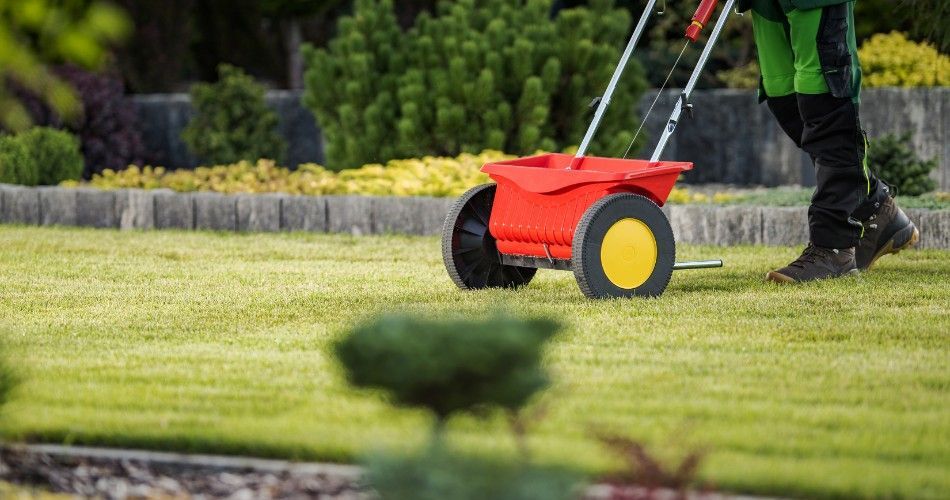
Applying ryegrass seed evenly helps prevent thin or patchy areas across commercial turf.
When Should You Overseed Turf in Phoenix, AZ?
The ideal window to overseed in the Phoenix area runs October 10 through November 10, according to UA Cooperative Extension’s turfgrass maintenance guide. Daytime temperatures around 80 to 85°F and nights near 55°F give ryegrass a chance to germinate as bermudagrass growth slows, allowing the ryegrass to establish before winter dormancy.
Seeding too early means ryegrass has to compete with actively growing bermudagrass, while seeding too late increases the risk of frost damaging young seedlings before they establish. For commercial properties, tracking conditions within the recommended window rather than relying on a single date helps account for differences between sites.
How Is Commercial Overseeding Different From Residential?
UA Cooperative Extension recommends 12 to 15 pounds of ryegrass seed per 1,000 square feet, with the appropriate rate depending on turf expectations, site conditions, and management goals. On commercial properties, achieving consistent coverage can be more challenging because turf often spans multiple irrigation zones, exposures, and high-traffic areas.
Entryways, courtyards, clubhouse lawns, and common areas also have higher visibility and heavier foot traffic than a typical residential lawn. Applying seed evenly across these areas matters because thin or patchy coverage is more noticeable and can deteriorate quickly under regular use.
How Do You Prep Commercial Turf Before Overseeding?
Preparing bermudagrass for overseeding begins about a month before the ryegrass seed goes down. The goal is to gradually slow bermudagrass growth and improve seed-to-soil contact without damaging the crowns and rhizomes it needs to recover in spring. UA Cooperative Extension recommends adjusting fertilization, mowing, and irrigation in stages leading up to seeding:
- 30 Days Before: Stop nitrogen fertilization on the bermudagrass.
- 14 Days Before: Raise the mowing height 30 to 40% and cut back irrigation by about 30%.
- 1-3 Days Before: Stop watering and mow the bermuda back down to the height it was before raising it.
- Just Before Seeding: Lower the mowing height another 25 to 30% to improve seed contact without aggressively damaging the crowns or rhizomes, and leave the clippings as mulch over the fresh seed.
PRO TIP: Dense hybrid bermuda varieties may also benefit from shallow, light dethatching or vertical mowing just before overseeding to help seed reach bare soil. Avoid aggressive dethatching immediately before seeding, which can damage the crowns and rhizomes bermudagrass needs for its spring transition.
Should You Water After Overseeding?
Yes, in fact, the first two weeks after overseeding require frequent irrigation to keep the seedbed consistently moist for germination. As the ryegrass establishes, watering should gradually become deeper and less frequent. A typical watering schedule looks like this:
- Days 1-10: Water 3 to 4 times per day for about 5 to 10 minutes per session, adjusting as needed to keep the seedbed consistently moist without pooling or runoff. Germination typically occurs within 7 to 10 days.
- Days 10-21: Once seedlings emerge, begin reducing watering frequency while increasing the depth of each watering. The goal is to move away from frequent surface moisture as roots develop.
- After Establishment: Continue tapering irrigation and water more deeply and less often. Use soil moisture and site conditions rather than a fixed calendar to determine when irrigation is needed. If the soil is still damp about 6 inches down, wait before watering again.
PRO TIP: About 14 days after seedlings emerge, apply ammonium phosphate (16-20-0) at 5 pounds per 1,000 square feet and water it in immediately. Avoid overfertilizing, which can increase frost damage, disease, and mowing requirements. Hold off on the first mowing until ryegrass reaches about 2¾ to 3 inches. For a day-by-day look at what to expect as seed germinates and fills in, see our ryegrass germination timeline for Phoenix commercial properties.
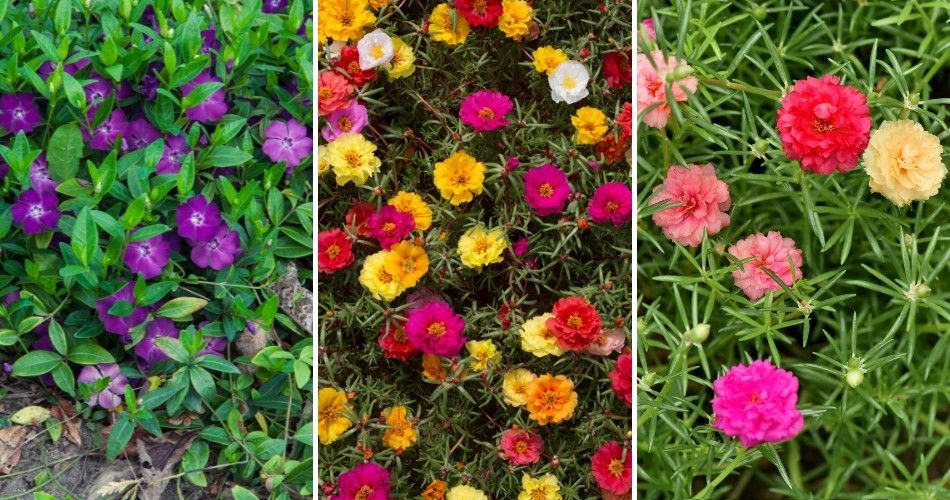
Vinca, portulaca, and moss rose are common warm-season annuals that can be replaced with cool-season color during the fall overseeding window.
Should You Bundle Winter Flowerbed Transition with Overseeding?
Yes, overseeding typically happens around the same time summer annuals begin declining with cooler weather, making it a good opportunity to transition flowerbeds to cool-season color. Vinca, portulaca, and moss rose can be replaced with varieties such as snapdragons, pansies, dianthus, and petunias.
For commercial properties, scheduling both services together can also reduce additional mobilization and site access:
- If a crew is already on-site to overseed, replacing summer annuals with cool-season varieties adds minimal cost compared with a separate visit.
- Turf and flowerbed transitions can be completed during the same service window, reducing disruption across the property.
- Bundling both services avoids paying for separate site visits when one crew can complete the seasonal transition at once.
Frequently Asked Questions About Overseeding
What’s the difference between annual and perennial ryegrass?
Perennial ryegrass has a deeper green color, narrower leaves, and better frost and disease resistance, and it persists longer into spring as bermuda greens back up. Annual ryegrass is lighter green with coarser leaves, grows faster, and needs more frequent mowing, but it costs less and works for properties where moderate turf quality is acceptable.
Does overseeding kill the bermudagrass underneath?
No, bermuda goes dormant, not dead, and the perennial ryegrass keeps the surface green while bermuda rests through winter. Bermudagrass begins actively growing again when soil temperatures are consistently around 60°F, typically in April in the Phoenix area.
How long until ryegrass fully fills in after overseeding?
Germination typically begins within the first 7 to 10 days when the seed bed is watered correctly. Full, even coverage typically follows over the next several weeks as the turf establishes and thickens.
Should a newly planted bermuda lawn be overseeded its first winter?
It’s generally best to skip overseeding newly established bermudagrass during its first winter, giving it time to develop vigorous roots and rhizomes. This is especially important if the lawn was installed late or had a short establishment period.
What mistakes hurt overseeding results most on commercial properties?
Problems that can hurt overseeding results include seeding outside the October 10 to November 10 window, failing to stop nitrogen fertilizer before seeding, and aerating or dethatching too aggressively immediately before overseeding.
Do commercial properties need to overseed every year?
If a commercial property wants green turf throughout winter, overseeding is generally an annual practice. Properties that don’t require green winter turf can skip overseeding and allow the bermudagrass to go dormant naturally.

Proper turf preparation before overseeding helps ryegrass establish more evenly across commercial lawns and high-visibility landscape areas.
Get Your Property on Titan’s Fall Overseeding Schedule
Timing, prep, and irrigation all affect how evenly ryegrass establishes for winter. For commercial properties, that means scheduling within the recommended seeding window while adjusting preparation and watering for the turf conditions at each site. Getting those details right can mean the difference between consistent winter coverage and thin, patchy areas.
Titan Landscape Services handles overseeding, prep work, and the winter flowerbed transition together so a property doesn’t need multiple vendors or site visits during Phoenix’s busy winter outdoor season.Call us at 480-418-4026 or request a free property evaluation to get your property on the schedule for the Phoenix seeding window.
