
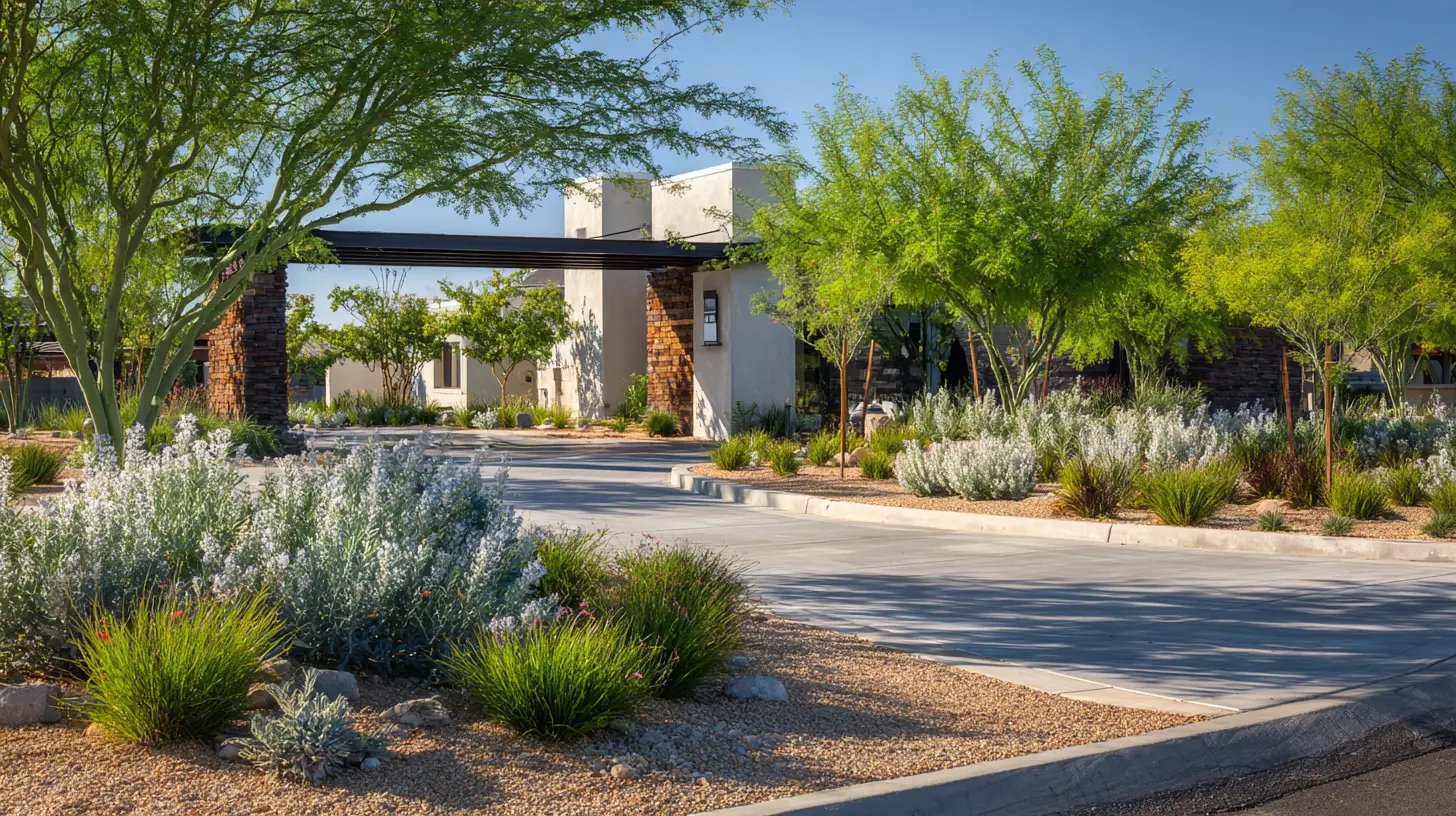
If you manage an HOA or commercial property in Phoenix, you’ve probably noticed your water bills going up while your landscape struggles through hotter summers. You’re not alone. Property managers across the Valley are rethinking outdoor spaces, and 2026 is shaping up to be the year Arizona landscapes finally match Arizona’s reality.
Why These Trends Matter Right Now
Water costs keep going up, and Phoenix summers keep getting longer and hotter. Your landscape is probably one of your biggest bills you can actually control, and the old method of “water more and hope for the best” stopped working years ago.
HOAs and commercial properties face two pressures: residents and tenants want nice outdoor spaces, while boards and owners want lower costs. Landscaping trends for 2026 solve both problems at once.
Trend 1: Climate-Smart, Water-Wise Design
Climate-smart landscaping sounds complicated, but it’s actually pretty straightforward. It involves designing landscapes that match the climate you have instead of the climate you wish you had.
What climate-smart design looks like in Phoenix:
- Grouping plants by how much water they need (hydrozoning)
- Using smart grading to prevent water waste
- Choosing plants that thrive naturally in desert conditions
When you drive through newer developments in Scottsdale or Tempe, you see this approach in action. Native Palo Verde trees provide shade, Desert Willow adds seasonal color, and Texas Sage looks better in August than most landscapes look in April. The big shift happening now is away from forcing non-native plants to survive and toward letting adapted plants do what they do naturally.
Trend 2: Modern Xeriscaping (Beyond Gravel and Cactus)
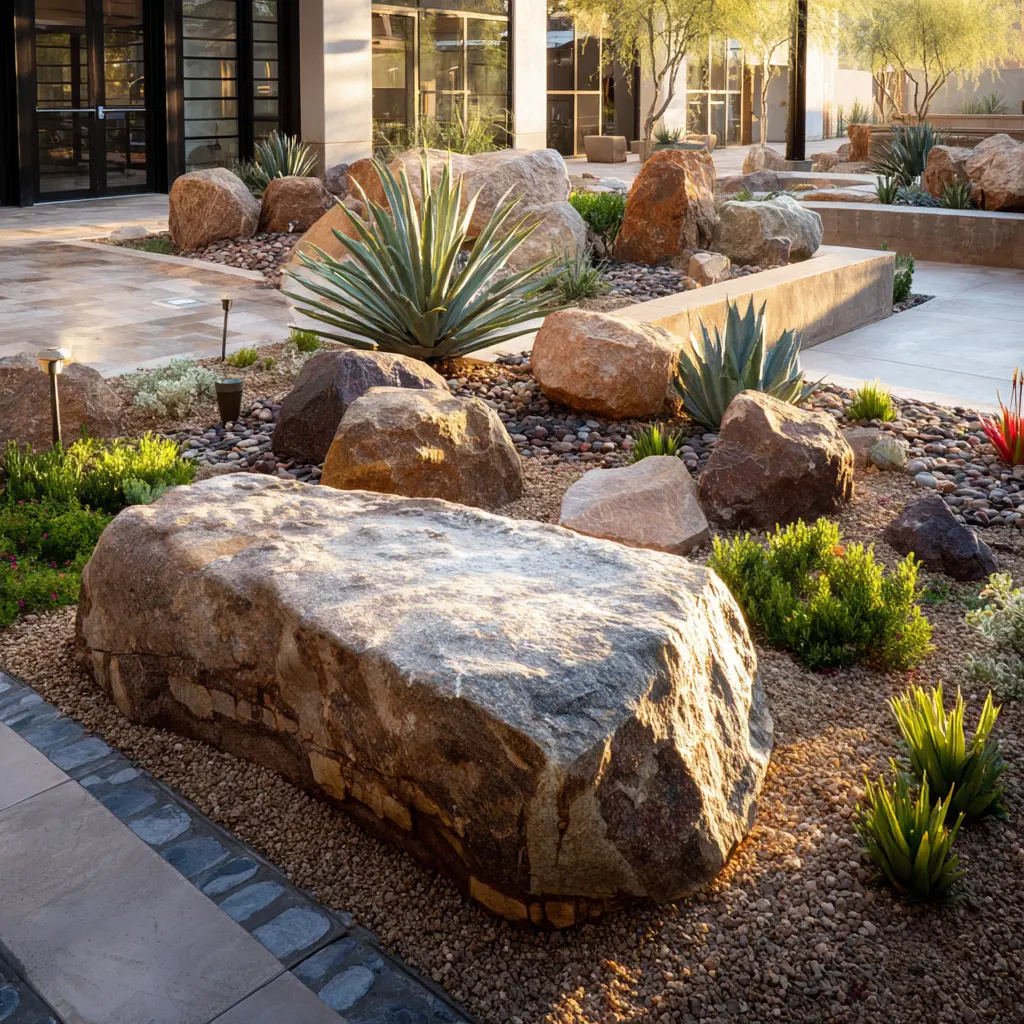
Xeriscaping is a great option for dry climates, using drought-tolerant plants and efficient water management. In Phoenix, xeriscaping has evolved from basic rock-and-cactus layouts to layered designs with texture, color, and depth.
Modern xeriscaping in 2026 includes:
- Layered textures with different boulder sizes
- Varied gravel colors and grades
- Bold accent plants like Red Yucca and Agave placed strategically
- Design that looks intentional and polished
Walk through any high-end property in North Scottsdale and you’ll see what’s possible. These landscapes have depth and color variation. They look expensive because they are, but they cost half as much to maintain as grass landscapes. No mowing, minimal trimming, and way less water use is why xeriscaping is finally catching on with property managers who care about both appearance and budgets.
Trend 3: Smart Irrigation Technology Becomes Standard
If your property still runs on old-school timers that water on a fixed schedule regardless of weather, you’re wasting money every week. Smart irrigation controllers, moisture sensors, and properly designed drip irrigation have moved from “nice to have” to standard equipment in 2026.
Why smart irrigation matters in Phoenix:
- Monsoon season (July through September) can bring sudden rainstorms that eliminate the need for supplemental watering
- May and June might bring 40 days with no rain while temperatures hit 115 degrees
- Fixed schedules can’t handle this variability, but smart controllers can
Newer controllers connect to local weather stations and soil moisture sensors, so they know when to water and when to shut off. After a monsoon storm rolls through, they automatically skip the next few watering cycles. When temperatures spike, they adjust run times accordingly. It’s not revolutionary technology, but it makes a measurable difference in both plant health and water costs.
Trend 4: Low-Maintenance Luxe Outdoor Spaces
Property managers are tired of landscapes that require constant intervention just to look acceptable. The new approach is what designers call “low-maintenance luxe,” which combines durable hardscaping with tough, regionally appropriate plants and simple, clean design.
Popular features for Phoenix communities:
- Pergolas and shade structures that create usable space during intense summer heat
- Fire features for comfortable winter evenings
- Defined seating areas with decomposed granite or pavers
- Straightforward plant palettes that maintenance crews can care for efficiently
The appeal is obvious: you get outdoor spaces that residents and tenants actually use, that look professionally maintained, and that don’t blow through your maintenance budget.
Trend 5: Regional, Purpose-Driven Plant Choices
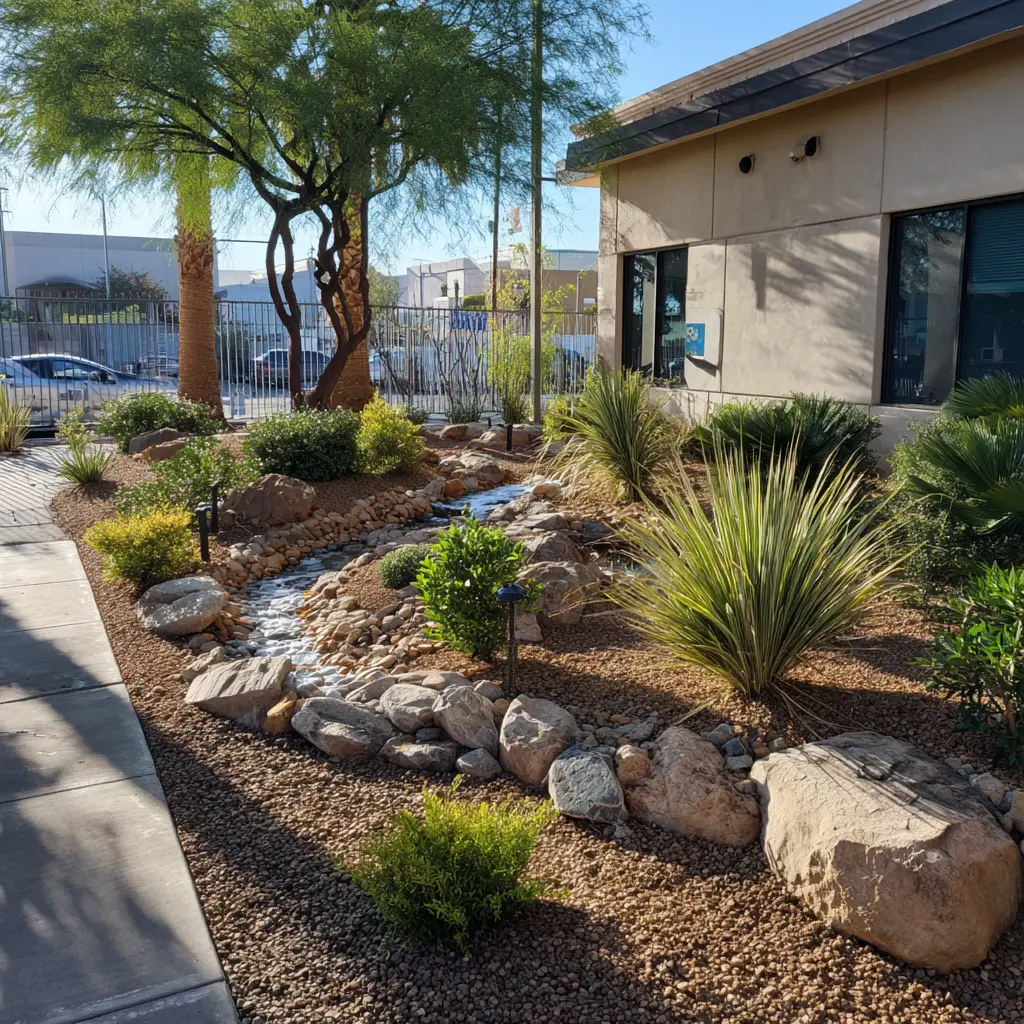
One of the biggest shifts in 2026 is toward plant choices that actually make sense for Phoenix. Instead of forcing Mediterranean or tropical plants to survive in the desert, landscape designers are working with native and desert-adapted species that handle our conditions naturally.
Benefits of regional plant species:
- Desert Marigold, Penstemon, and native Salvias look good year-round
- They attract pollinators like hummingbirds and native bees
- They need minimal water once established
If your property has older landscaping full of non-native palms, high-water ornamental grasses, or other plants that struggle in Phoenix’s climate, 2026 might be the year to reconsider those choices. Swapping out high-maintenance plants for regional alternatives improves the appearance of your landscape while cutting ongoing costs.
Trend 6: Budget and ROI-Focused Upgrades
Property managers in 2026 are done with landscape upgrades that look good on paper but don’t deliver real returns. The focus has shifted hard toward projects that can be evaluated by actual numbers: cost per square foot, water savings, maintenance hour reductions, and long-term value.
Three upgrades that consistently deliver strong returns:
Turf conversions: Removing Bermudagrass and replacing it with xeriscape cuts water use dramatically while eliminating mowing, edging, and fertilization. The upfront cost is real, but the ongoing savings add up fast.
Irrigation retrofits: Installing smart controllers and properly designed drip irrigation pays for itself through reduced water waste. Plus, these upgrades keep plants healthier, which means fewer replacements down the line.
Strategic shade planting: Native trees like Desert Willow and Palo Verde create usable outdoor space during summer while reducing cooling costs for nearby buildings. They provide filtered shade without the massive water needs of non-native shade trees.
All three reduce operating costs while improving appearance.
Make the Most of Your Outdoor Space in 2026
The landscaping trends shaping 2026 in Phoenix all point in the same direction: water-wise design that cuts costs without sacrificing curb appeal. Climate-smart plant selection, modern xeriscaping, smart irrigation technology, low-maintenance outdoor spaces, and regional plant choices are helping property managers across the Valley reduce water bills and maintenance hours while keeping properties looking professional year-round.
Titan Landscape Services works with Phoenix-area commercial and HOA properties to implement these upgrades. Schedule a walk-through with Titan Landscape Services to identify upgrades that will reduce costs and improve curb appeal for your Phoenix property.
FAQ: 2026 Landscaping Trends in Arizona
What are the biggest landscaping trends in Arizona for 2026?
The biggest trends are climate-smart water-wise design, modern xeriscaping with actual design work, smart irrigation technology, low-maintenance luxe outdoor spaces, and regional plant selections that work with Phoenix’s climate instead of fighting it. All of these address water costs and extreme temperatures.
How is xeriscaping different now compared to ten years ago?
Xeriscaping used to mean “all gravel and cactus” with minimal design work. In 2026, it means layered, design-forward landscapes that combine different boulder sizes, varied gravel grades, and carefully selected desert plants like Agave, Red Yucca, and native grasses. The goal is creating visual interest without water waste.
Why are smart irrigation controllers worth the investment?
Smart controllers adjust to actual weather and soil conditions instead of watering on a fixed schedule. They automatically reduce or skip watering after monsoon rains, adjust for temperature changes, and integrate with local weather data. For Phoenix properties, that means less water waste and healthier plants.
Can low-water landscapes still look professional and upscale?
Absolutely. “Low-maintenance luxe” designs use quality hardscapes, structured plant arrangements, and clean lines to create upscale outdoor spaces that are easier and more affordable to maintain. The focus is on intentional design and regional appropriateness rather than trying to replicate landscapes from wetter climates.
What landscape upgrades give the best return on investment in Arizona?
Turf removal with xeriscape conversion, irrigation retrofits with smart controllers, and strategic native shade tree planting consistently deliver strong returns. These upgrades cut water use and maintenance labor while improving property appearance and creating more usable outdoor space during Phoenix’s extreme heat.